
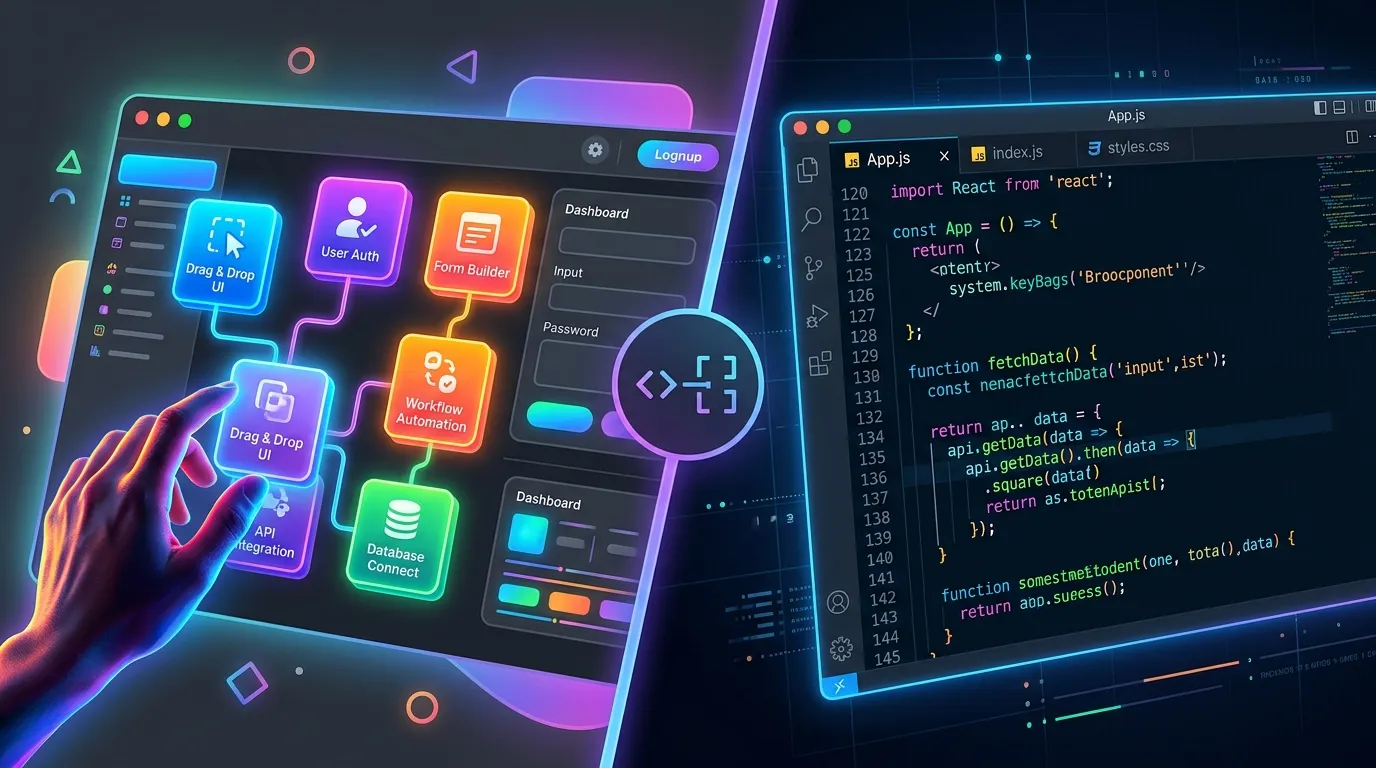
Bubble vs Custom Development: Which One Should Startups Choose in 2026?
Starting a technology company in 2026 is exhilarating, but the initial technical decisions you make can dictate your startup’s trajectory for years. As a founder, CTO, or product manager, one of the most critical cross-roads you will face early on is choosing the right technology to build your MVP (Minimum Viable Product).
Today, the debate almost always boils down to two heavyweights: Bubble vs Custom Development.
On one side, you have Bubble—the undisputed king of no-code platforms, promising lightning-fast launches and drastically reduced initial costs. On the other side, you have Custom Software Development—the traditional, robust, and infinitely scalable approach that gives you absolute ownership and control over your SaaS product development.
At Ganesha WebTech, we have spent over 15 years acting as the trusted startup technology partner for hundreds of founders. We’ve built MVPs from scratch, rescued projects trapped in restrictive platforms, and scaled applications to millions of users. We’ve seen firsthand when no-code platforms like Bubble are a superpower and when they become a costly bottleneck.
In this comprehensive guide, we will break down the Bubble vs Custom Software Development debate. We will compare costs, scalability, performance, and investor perspectives so you can confidently choose the right path for your startup software development journey.
1. What is Bubble?
Bubble is a powerful visual programming platform that allows users to build fully functional web applications without writing code. It is often referred to as the most robust “No-Code Development” platform available today.
Instead of writing HTML, CSS, JavaScript, or database queries, Bubble provides a drag-and-drop interface for UI design and a workflow builder to handle the logic and database management.
Core Features of Bubble:
- Visual Interface: Drag-and-drop elements to design your front-end.
- Workflow Engine: Define logic (e.g., “When button clicked -> Sign up user”).
- Built-in Database: Integrated data management without setting up separate SQL or NoSQL databases.
- API Connectors: Connect to third-party services like Stripe, SendGrid, or OpenAI.
- Hosting Included: Bubble handles the server infrastructure and deployment.
For founders looking to build an MVP for a startup quickly, Bubble offers an incredibly fast path to market. It removes the immediate need for a full software development company, allowing non-technical founders to act as their own developers—up to a point.
Is Bubble good for startups?
Yes, Bubble is an excellent tool for startups looking to build a Minimum Viable Product (MVP) quickly and cost-effectively. It allows non-technical founders to validate their ideas in the market without the high initial costs of custom software development. However, for complex, highly scalable SaaS platforms, custom development is eventually required.
2. What is Custom Development?
Custom Software Development is the process of designing, creating, deploying, and maintaining software tailored explicitly for a specific set of users, functions, or organizations. Instead of using a platform’s visual builder, you hire product engineering services—like Ganesha WebTech—to write the foundational code of your application using frameworks like React, Node.js, Laravel, or Flutter.
Core Features of Custom Development:
- Infinite Customization: If you can imagine it, it can be coded.
- Full Ownership: You own the intellectual property (IP) and the source code.
- Unrestricted Scalability: Architecture can be designed to handle millions of concurrent users.
- Total Control over Hosting: Deploy on AWS, Google Cloud, Azure, or your private servers.
- Optimized Performance: Code is written specifically for your use case, eliminating bloat.
Custom development is the gold standard for SaaS product development. It is what companies like Airbnb, Uber, and Slack rely on. While it requires a larger upfront investment, partnering with the right startup software development agency ensures your product is built on a foundation that can support long-term enterprise growth.
3. Bubble vs Custom Development Comparison
To truly understand which route is best for your MVP app development, we need to compare them across the metrics that matter most to a startup founder.
The High-Level Comparison Table
| Feature | Bubble (No-Code) | Custom Software Development |
|---|---|---|
| Initial Cost | Low to Medium | Medium to High |
| Time to Market | Extremely Fast (Weeks) | Moderate to Slow (Months) |
| Scalability | Limited by Bubble’s infrastructure | Unlimited (AWS, GCP, Azure) |
| Customization | High, but constrained by plugins | Infinite |
| IP & Code Ownership | You do not own the source code | 100% Yours |
| Learning Curve | Moderate (Bubble logic) | High (Requires professional developers) |
| Vendor Lock-In | Extreme (Cannot export code) | None (Can move code anywhere) |
| Best For | Early MVPs, Validation, Internal Tools | Scalable SaaS, Enterprise, Complex Logic |
Unsure which path fits your specific SaaS idea? Book a Free MVP Consultation with our technical architects today.
4. Cost Comparison: The Real Price of Building a Startup
The MVP development cost is often the deciding factor for early-stage founders. Let’s break down the short-term and long-term financial implications.
The Bubble Cost Structure
Building on Bubble is initially cheaper. You are primarily paying for:
* Bubble Subscription: $32 to $399+ per month depending on workload units (WU).
* Plugin Fees: Many advanced integrations require paid plugins.
* Developer Costs: If you hire a Bubble freelancer, expect to pay $50 – $150/hour. A full MVP might cost $5,000 – $15,000.
The Catch: Bubble recently changed its pricing model to be based on “Workload Units” (server capacity). If your app relies heavily on complex database queries or API calls, your monthly Bubble bill can skyrocket unexpectedly, sometimes surpassing the cost of custom cloud hosting.
The Custom Development Cost Structure
Custom web application development requires a higher initial investment but offers predictable long-term scaling costs.
* Development Costs: Hiring an offshore software development partner like Ganesha WebTech can bring costs down significantly while maintaining high quality. An MVP typically ranges from $15,000 to $50,000+, depending on complexity.
* Hosting: AWS or DigitalOcean might cost $20-$100/month initially, scaling linearly with your traffic.
* Maintenance: Ongoing retainer for a software development company to update frameworks and add features.
Long-Term ROI Comparison Table
| Timeline | Bubble Scenario | Custom Development Scenario |
|---|---|---|
| Year 1 (Launch) | $10,000 (Build) + $2,000 (Subs) = $12,000 | $35,000 (Build) + $1,000 (Hosting) = $36,000 |
| Year 2 (Scaling) | $5,000 (Updates) + $8,000 (High WU Subs) = $25,000 | $15,000 (Updates) + $2,500 (Hosting) = $53,500 |
| Year 3 (Rebuild Phase) | $50,000+ (Forced to rebuild in custom code due to limits) | $20,000 (Scaling & New Features) = $73,500 total |
The Verdict on Cost: Bubble is cheaper to start, but custom development is cheaper to scale. If your product succeeds, building it on Bubble often results in paying for development twice: once in Bubble, and once when you inevitably have to rewrite it in custom code.
5. Speed to Market
In the startup world, speed is survival. Getting your product into users’ hands quickly allows you to gather feedback and iterate.
Bubble: The Speed Champion
Bubble was designed for rapid prototyping. A dedicated founder or a skilled Bubble developer can launch a functional MVP in 2 to 6 weeks. You bypass the need to set up servers, configure databases, or write boilerplate code. For startup product validation, this speed is unparalleled.
Custom Development: The Methodical Approach
Custom startup software development services take longer. A standard MVP development timeline involves wireframing, UI/UX design, frontend development, backend architecture, and QA testing. This typically takes 3 to 6 months.
However, utilizing agile methodologies and a proficient team, Ganesha WebTech can drastically accelerate this timeline, delivering custom MVPs in as little as 8-12 weeks by leveraging established architectures and libraries.
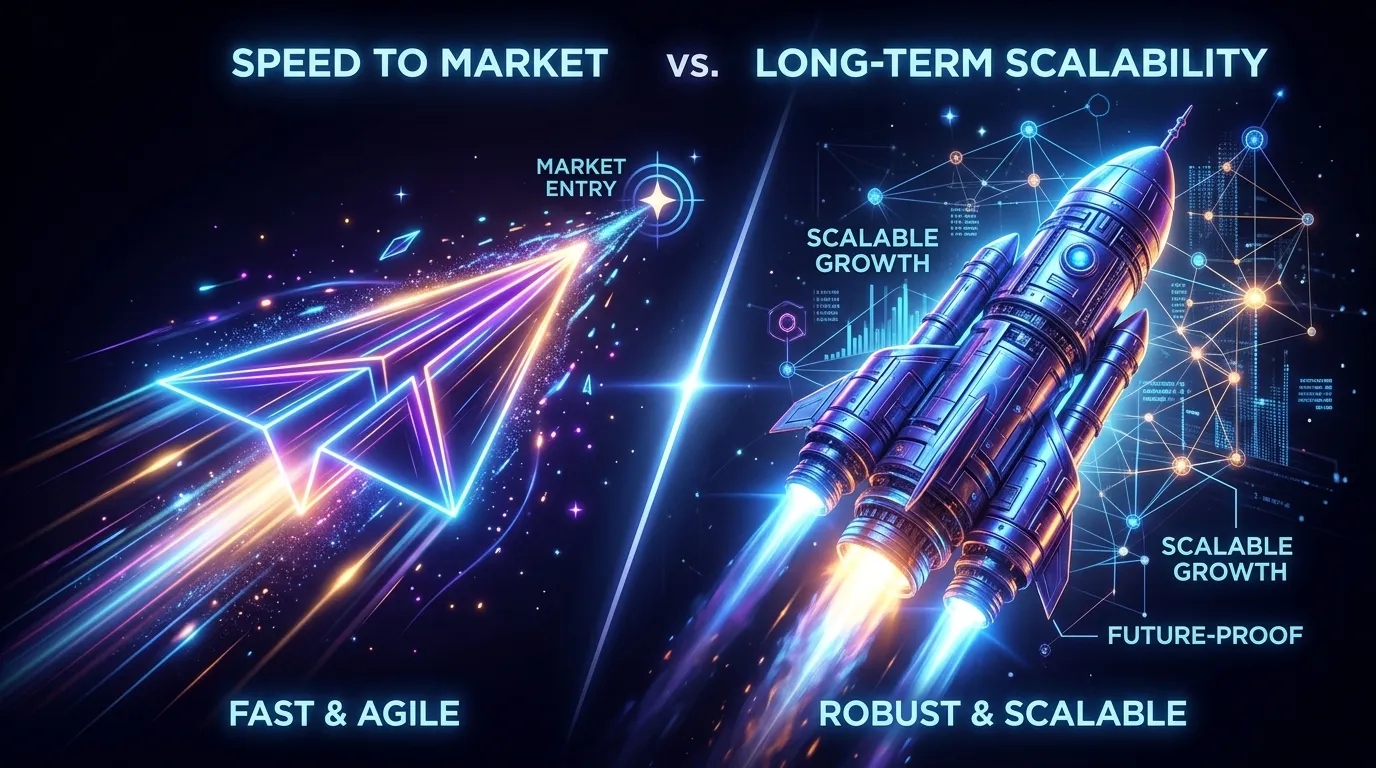
Speed to Market vs Long-Term Scalability
6. Scalability: What Happens When You Grow?
This is the most critical difference in the Bubble vs Custom Software Development for Startups debate.
Bubble Limitations
While Bubble has improved its infrastructure, it is ultimately a shared environment. You share server resources with thousands of other Bubble apps.
* Database Limits: Complex queries on large datasets become noticeably slow.
* Concurrent Users: Sudden spikes in traffic (like a successful Product Hunt launch) can throttle your app or result in massive overage charges under the new Workload Unit pricing.
* Global Distribution: You lack granular control over CDN placement and server regions compared to a custom AWS setup.
Custom Development Scalability
With custom web application development, the sky is the limit. A skilled SaaS development company will architect your platform using microservices, load balancers, and optimized database indexing.
* You can handle tens of thousands of concurrent users.
* You can optimize individual API routes.
* You control the exact server architecture, ensuring maximum efficiency.
If your ambition is to build a massive, globally utilized SaaS platform, starting with custom development prevents the painful “platform migration” phase later.
7. Performance and User Experience (UX)
Today’s users expect lightning-fast, buttery-smooth applications.
Bubble: Apps built on Bubble generate heavy HTML/JavaScript payloads. While it’s fine for simple dashboards, complex pages with many dynamic elements can feel sluggish. Furthermore, true UI/UX Design is sometimes constrained by Bubble’s responsive engine, making it difficult to achieve pixel-perfect, highly complex animations.
Custom Development: Technologies like React.js, Vue.js, or Next.js offer unparalleled performance. Single Page Applications (SPAs) load instantly, animations are hardware-accelerated, and the user experience can be perfectly tailored to your brand. When building a SaaS MVP, a premium feel can significantly impact user retention.
Want a product that feels premium and lightning-fast? Talk to Our SaaS Experts about React and Laravel development.
8. Security and Compliance
For startups dealing with fintech, healthcare (HIPAA), or enterprise clients (SOC 2), security is non-negotiable.
Security Comparison Table
| Security Aspect | Bubble | Custom Development |
|---|---|---|
| Data Location | US-based primarily (Dedicated instances cost thousands/mo) | Anywhere (AWS, EU-servers for GDPR) |
| Code Vulnerabilities | Handled by Bubble (You rely entirely on them) | Handled by your agency (Can run penetration tests) |
| Compliance (HIPAA/SOC2) | Extremely difficult/expensive to certify | Straightforward with proper architecture |
| Database Access | Restricted to Bubble’s UI | Full control, encryption at rest/transit |
If you are building enterprise software development solutions or handling sensitive user data, custom development is not just recommended; it is mandatory.
9. Mobile App Development: Bubble vs Flutter
Founders often ask: “Can I build a mobile app with Bubble?”
Technically, you can build a responsive web app on Bubble and “wrap” it into a native shell (using tools like BDK Native or Cordova) to put it on the App Store. However, the result is a web-view app. It will lack native performance, offline capabilities, and smooth transitions.
The Flutter Advantage
If your product is primarily a mobile experience, you should look beyond Bubble alternatives. At Ganesha WebTech, we are a leading Flutter App Development Company.
Flutter (created by Google) allows you to write one custom codebase that compiles into true, high-performance native apps for both iOS and Android.
Bubble vs Flutter Table
| Feature | Bubble (Wrapped Web App) | Flutter (Custom Native App) |
|---|---|---|
| Performance | Sluggish, relies on web browser speed | 60-120 FPS, true native performance |
| Offline Mode | Nearly impossible | Fully supported (SQLite, Hive) |
| Device Hardware | Clunky access to camera, GPS, Bluetooth | Seamless native access |
| App Store Approval | Higher risk of rejection (Apple dislikes web wrappers) | Easy approval, follows native guidelines |
If you need a mobile app, build startup app with Flutter. It is the most cost-effective way to get premium custom mobile apps on both platforms simultaneously.
10. AI & Automation Capabilities
In 2026, AI SaaS Development is a massive trend. How do these platforms handle AI?
Bubble: Excels at basic AI integrations. You can easily connect to OpenAI’s API via plugins to generate text, summarize data, or create basic chatbots. For thin wrappers around ChatGPT, Bubble is fantastic.
Custom Development: Required if you are building proprietary AI models, utilizing complex LangChain workflows, training custom machine learning algorithms, or requiring low-latency streaming responses. A custom startup tech stack (like Python/FastAPI backends) is essential for serious AI companies.
11. API & Third-Party Integrations
Your SaaS will likely need to talk to Stripe, HubSpot, Twilio, and countless other services.
Bubble’s API Connector is incredibly powerful, allowing non-developers to integrate REST APIs. However, if an API requires complex authentication flows, webhook handling with intricate logic, or heavy data processing (like syncing thousands of records), Bubble’s workflow engine can time out or become unmanageably complex.
Custom development offers unrestricted API capabilities. You can build complex microservices dedicated solely to handling heavy third-party data synchronization reliably in the background.
12. Ownership & Vendor Lock-In
This is the “elephant in the room.”
When you build on Bubble, you do not own your source code. You cannot export your Bubble app and host it on AWS. If Bubble raises its prices (as they did in 2023), goes out of business, or bans your account, your entire product disappears. You are subjected to ultimate vendor lock-in.
With custom software development, you own 100% of the Intellectual Property. The code belongs to you. You can fire your software development company, hire an in-house team, and host it anywhere in the world. For many founders, this peace of mind is worth the extra initial cost.
13. Maintenance Costs and Technical Debt
Every software product incurs technical debt.
In Bubble, “spaghetti code” looks like a messy, tangled web of visual workflows that are incredibly hard for a new developer to decipher. Debugging a complex Bubble app can take longer than debugging well-written React code.
In custom development, technical debt is managed through established engineering practices: Git version control, automated testing (unit tests, integration tests), and code reviews.
While custom software requires paying for server maintenance and framework updates, it results in a vastly more stable product over a 3 to 5-year horizon.
14. Hidden Costs Founders Forget
When weighing Bubble vs Custom Software Development, factor in these hidden costs:
- The Rebuild Tax: 80% of successful startups built on Bubble end up rebuilding entirely in custom code by Year 2 or 3 to handle scale. This means paying for two development cycles.
- The Plugin Trap: Relying on third-party Bubble plugins means your app’s functionality depends on amateur developers maintaining their plugins. If a plugin breaks, your app breaks.
- The Talent Scarcity: Finding a world-class Bubble developer is often harder (and just as expensive) as finding a good React developer, because the pool of true experts is much smaller.
15. The Startup Funding Perspective: What Do Investors Want?
Are you planning to raise Venture Capital (VC) or Angel funding? Your tech stack matters.
Pre-Seed / Angel Round:
At this stage, investors just want to see traction. MVP for Investors built on Bubble is perfectly acceptable if it proves people will pay for your solution.
Seed / Series A:
As you raise larger rounds ($1M+), investors conduct Technical Due Diligence. They will scrutinize your architecture. VCs generally dislike platform risk (vendor lock-in) and scaling limits.
If you are raising a Seed round, investors will almost certainly require you to use a portion of those funds to migrate off Bubble and invest in Custom App Development. If you start with custom code, you pass technical due diligence with flying colors and can use the funds strictly for growth.
Which option do investors prefer: Bubble or Custom Development?
For early-stage validation (Pre-seed), investors do not mind Bubble, as the focus is on market traction. However, for Seed and Series A rounds, investors strongly prefer Custom Development. Custom code ensures IP ownership, eliminates vendor lock-in, and guarantees the platform can scale to enterprise levels—factors critical for technical due diligence.
16. Bubble for MVP Validation: A Valid Strategy
We are a custom software development company, but we respect Bubble’s power. Using Bubble solely for product discovery and validation is a highly intelligent strategy.
If you are unsure if your target audience actually wants your product, spend $5,000 to build a Bubble MVP in 3 weeks. Try to get 10 paying customers. If it fails, you only lost a little time and money. If it succeeds, you now have the revenue and validation required to confidently hire Ganesha WebTech to build the real, custom version.
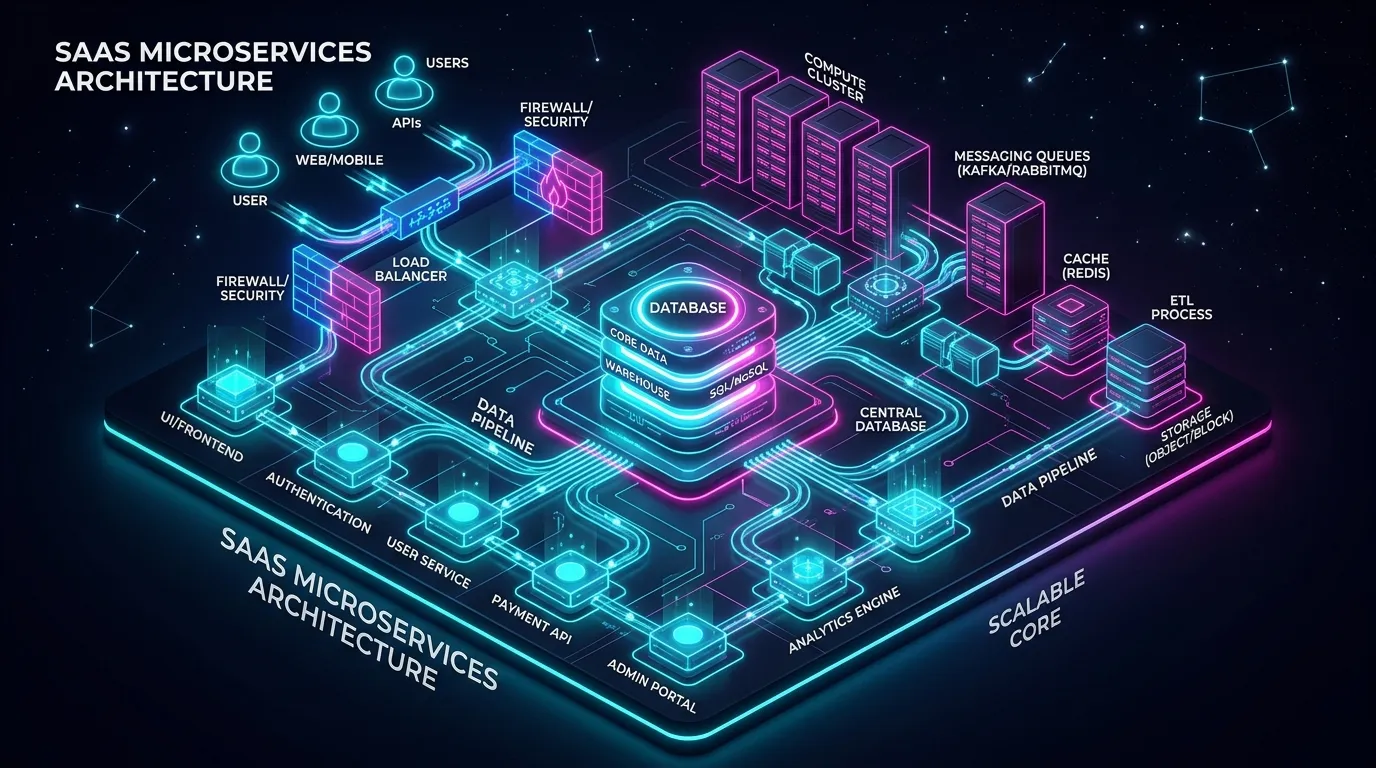
A robust, highly scalable Custom SaaS Architecture
17. When Bubble is the Right Choice
You should choose Bubble if:
1. You are a solo, non-technical founder with a budget strictly under $10,000.
2. Your primary goal is validation, not building the final enterprise product.
3. You are building an internal tool for your own small business where scalability isn’t an issue.
4. Time is your only currency, and you need a working prototype in 14 days.
18. When Custom Development is Better
You should invest in Custom Software Development (React, Laravel, Node, Flutter) if:
1. You are building a B2B SaaS that must handle large amounts of data securely.
2. You need a true Mobile App (Use Flutter for native performance).
3. You require custom IP ownership to appease investors or enterprise clients.
4. You are integrating complex AI or heavy background API processes.
5. Your UI/UX needs to be world-class to compete in a crowded market.
6. You are funded and want to build the architecture right the first time.
19. The Hybrid Approach (Bubble → Custom)
Many successful startups adopt a phased approach:
- Phase 1 (Months 1-4): Build a rapid MVP on Bubble. Validate the market, acquire the first 100 users, and figure out what features people actually use.
- Phase 2 (Months 5-8): Partner with an offshore software development agency like Ganesha WebTech. We take your validated Bubble concept and architect a highly scalable custom application (e.g., React frontend + Laravel backend).
- Phase 3 (Month 9+): Migrate users to the new custom platform, completely free of vendor lock-in and ready for massive scale.
20. Real-World Startup Examples
- The Bubble Success Story: Dividend Finance famously built their initial platform on Bubble, processing over $1 Billion in loans before eventually migrating to custom code as they scaled into an enterprise entity.
- The Custom Code Necessity: Figma could never have been built on a no-code platform. The intense browser-based rendering required a highly custom C++ and WebAssembly architecture from day one.
Understanding your product’s technical ceiling will dictate your path.
21. Common Mistakes Founders Make
- Treating Bubble as a final destination: Expecting a no-code tool to act like a scalable AWS enterprise infrastructure.
- Over-engineering the MVP: Spending $100,000 on custom development before knowing if anyone wants the product. (Start smaller, even with custom code).
- Ignoring Mobile Realities: Trying to force a Bubble web-wrapper into the iOS store instead of investing in proper Flutter app development.
- Choosing the wrong agency: Hiring a cheap agency that delivers custom code that is actually worse and harder to maintain than a Bubble app. Quality matters.
22. The Ultimate Decision Matrix
Still stuck? Use this matrix to make your decision:
| Requirement | Choose Bubble | Choose Custom (Ganesha WebTech) |
|---|---|---|
| Budget | < $15,000 | $20,000+ |
| Data Privacy (HIPAA, etc.) | ❌ No | ✅ Yes |
| Native Mobile App Needed | ❌ No | ✅ Yes (Flutter) |
| Proprietary AI Logic | ❌ No | ✅ Yes |
| IP Ownership Required | ❌ No | ✅ Yes |
| Pixel-Perfect Custom UI | ❌ No | ✅ Yes |
| Launch in 3 Weeks | ✅ Yes | ❌ No |
Estimate Your Development Cost today. Let our experts analyze your requirements and provide a transparent, no-obligation quote.
23. Frequently Asked Questions (FAQs)
1. Is Bubble good for startups?
Yes, for early-stage SaaS MVPs, Bubble is excellent. It allows you to build user authentication, subscription billing (via Stripe), and dashboards quickly. However, successful SaaS products usually migrate to custom code to reduce server costs and improve performance as they scale.
2. Can Bubble build scalable SaaS products?
Bubble can scale to a certain point (thousands of users), but it struggles with database-heavy applications. The new Workload Unit (WU) pricing also makes scaling a high-traffic app on Bubble financially inefficient compared to custom cloud hosting.
3. What happens when Bubble outgrows my business?
When you outgrow Bubble, you must completely rebuild your application using custom code (e.g., React, Node.js). You cannot export your Bubble code. This is why partnering with a SaaS development company early on is crucial for the transition.
4. Is Flutter better than Bubble?
For mobile apps, absolutely. Flutter is a framework for building high-performance, native iOS and Android apps. Bubble builds responsive web apps. If you want a true app store presence, Flutter App Development is vastly superior.
5. How much does custom development cost?
An MVP built via custom development typically costs between $15,000 and $50,000+, depending on the features and the agency you choose. Utilizing offshore software development services can optimize this cost significantly while maintaining high standards.
6. Can Bubble integrate with AI?
Yes, Bubble can easily connect to AI APIs like OpenAI (ChatGPT) via its API connector to generate text or images. However, for training custom AI models or handling complex streaming data, custom development is required.
7. Can I migrate from Bubble to custom software?
You cannot automatically translate Bubble visual logic into custom code (like React). A migration requires a complete rewrite of the application’s front-end and back-end by a software development team. You can, however, export your database records (users, data) to the new system.
8. Which option do investors prefer?
For Pre-seed validation, Bubble is acceptable. However, for Seed and Series A funding, investors overwhelmingly prefer Custom Development to ensure IP ownership, scalability, and passing technical due diligence.
9. Are there good Bubble Alternatives?
Yes. For internal tools, Retool is excellent. For native mobile no-code, FlutterFlow is popular. For web, Webflow (paired with Wized or Xano) is an option. However, none offer the infinite flexibility of true custom coding frameworks like Laravel or React.
10. Is Bubble suitable for enterprise applications?
Generally, no. Enterprise applications require strict compliance (SOC 2, HIPAA), self-hosting capabilities, guaranteed uptime SLAs, and advanced security architectures that Bubble cannot currently provide.
11. What is the best technology stack for SaaS startups?
For robust SaaS platforms, the industry standard includes a React.js or Vue.js frontend, paired with a Node.js, Laravel (PHP), or Django (Python) backend, hosted on AWS or Google Cloud.
12. Does custom software take longer to build?
Yes. Because developers must write code, set up servers, and configure databases manually, a custom MVP takes 2 to 4 months, whereas Bubble might take 2 to 6 weeks.
13. Why should I hire an agency for MVP development?
Hiring a startup software development agency like Ganesha WebTech ensures your product is built with best practices, scalable architecture, and a premium UI/UX, avoiding the technical debt often created by inexperienced freelancers.
24. Final Verdict: Which Should You Choose?
The debate between Bubble vs Custom Development isn’t about which is objectively “better”—it is about which is appropriate for your startup’s current lifecycle stage.
Choose Bubble if: You have no technical background, a tiny budget, and simply need to prove that a customer will click a “Buy” button on your idea. Use it as a disposable prototype.
Choose Custom Development if: You are building a serious SaaS business, a native mobile app, handling sensitive data, or planning to raise venture capital. If you want to build an asset that you own, control, and can scale to millions of users, custom code is the only true path.
Building a startup is hard enough; don’t let platform limitations hold your vision hostage.
25. Why Choose Ganesha WebTech as Your Startup Technology Partner?
At Ganesha WebTech, we don’t just write code; we build businesses. As a premier Startup Software Development Company, we bridge the gap between rapid MVP launches and enterprise-grade scalability.
Whether you need to Build an MVP for a Startup from scratch, migrate off a restrictive no-code platform, or architect a complex AI SaaS application, our team of senior product engineers, UX/UI designers, and technical consultants are here to execute your vision.
Our Core Services Include:
- Custom MVP Development: Get to market in 8-12 weeks with scalable, clean code.
- SaaS Product Development: End-to-end architecture for high-growth software companies.
- Flutter App Development: Premium native mobile experiences for iOS and Android.
- Startup Product Consulting: We help you define your roadmap and avoid costly technical mistakes.
- Offshore Development Services: Silicon Valley quality at highly competitive rates.
Stop guessing about your tech stack. Partner with experts who have helped founders build, scale, and exit.
Ready to bring your startup vision to life?
👉 Schedule a Free Discovery Call Today
👉 Explore Our Custom Development Portfolio
Let Ganesha WebTech build the foundation for your startup’s success.